



Medical consultation: Dr Le Thi Tram, Specialist Level II, Department of Respiratory Medicine, Hong Ngoc–Phuc Truong Minh General Hospital
In brief: How does stress affect asthma?
- Stress can contribute to poorer asthma control, although its effects vary from person to person.
- During periods of stress or anxiety, breathing patterns may change, making breathlessness or chest tightness more noticeable.
- Psychological stress may affect the neuroendocrine system and immune pathways involved in asthma.
- Prolonged stress can affect sleep, daily routines and adherence to a treatment plan.
- Asthma and anxiety can occur together, and some symptoms may overlap. Do not assume that all breathlessness during stressful periods is psychological.
Why can stress worsen asthma symptoms?
Stress may affect asthma through several pathways, including changes in breathing patterns, neuroendocrine activity and immune responses, as well as changes in daily routines and adherence to treatment. However, airway responses to stress vary from person to person.
The relationship between stress and asthma is complex. It is not as simple as assuming that stress immediately causes the bronchial tubes to narrow. Several mechanisms may be involved, and the effect depends on the individual, their asthma control and the circumstances causing stress.
1. Stress and anxiety can change breathing patterns
When people feel stressed, frightened or anxious, their bodies may respond with physical changes such as a faster heartbeat and altered breathing patterns.
In people with asthma, these changes may make breathlessness or chest tightness feel more noticeable. If someone becomes worried because they feel they are not breathing normally, their breathing may become more rapid, which can intensify the discomfort.
This cycle may develop as follows:
Stress or anxiety → changes in breathing → more noticeable breathlessness → increased anxiety → further increase in breathlessness.
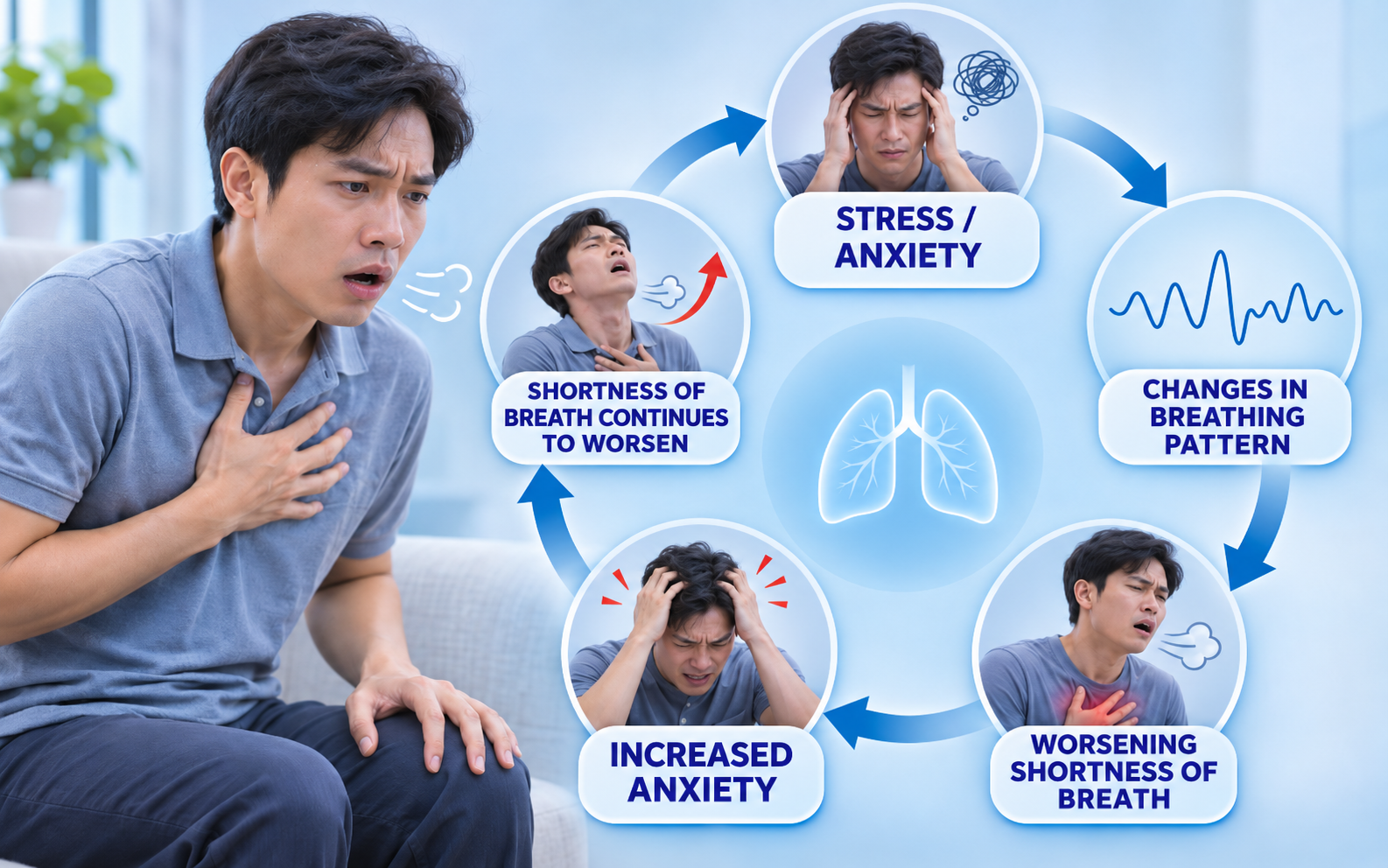
Breathlessness that worsens during stress does not necessarily mean that bronchoconstriction has also increased. Asthma and anxiety symptoms can overlap, so people should not try to identify the cause based on the sensation of breathlessness alone. GINA 2026 notes that panic attacks may be mistaken for asthma symptoms, and distinguishing between them can be difficult. ginasthma.org
2. Stress may affect the neuroendocrine system
When the body faces stress, several regulatory systems are involved in the response, including the autonomic nervous system and the hypothalamic–pituitary–adrenal (HPA) axis.
Experimental studies in people with asthma have found that active stressors are associated with increased sympathetic nervous system activity, cortisol levels and some inflammatory responses, but have little immediate effect on airway calibre. By contrast, some passive stressors in laboratory settings have been associated with respiratory changes suggestive of mild bronchoconstriction.
However, evidence on some types of stress remains limited, and findings from laboratory settings cannot be directly applied to every stressful situation in daily life. pubmed.ncbi.nlm.nih.gov
It is therefore inaccurate to assume that stress always causes the bronchial tubes to narrow. A more appropriate explanation is that stress may affect biological systems involved in regulating the airways, but the response varies according to the individual and their asthma.
3. Stress may affect inflammatory mechanisms involved in asthma
Asthma involves inflammation and increased responsiveness of the airways. Researchers have therefore examined whether psychological stress may affect immune and inflammatory processes associated with the condition.
One model proposed in the literature suggests that psychological stress may influence how the airways respond to triggers such as allergens, irritants and infections. This may involve biological pathways including the HPA axis, the sympathetic–adrenal–medullary system and the autonomic nervous system.
However, the relationship between stress, the neuroendocrine and immune systems, and airway inflammation is complex. It should not be reduced to a simple formula such as “stress raises cortisol and causes an asthma attack”, nor should stress be assumed to directly increase airway inflammation in everyone with asthma.
4. Prolonged stress may affect asthma control
As well as having physiological effects, stress may affect asthma through changes in everyday behaviour and routines.
People experiencing ongoing pressure may find it harder to maintain regular routines, get enough sleep or follow their treatment plan. For someone with asthma, inconsistent use of controller medication or not using it as directed may affect asthma control.
According to the Global Initiative for Asthma (GINA) 2026, coexisting mental health conditions such as anxiety and depression are associated with poorer asthma symptom control, lower medication adherence and poorer asthma-related quality of life. ginasthma.org
This means stress does not have to directly cause bronchoconstriction to affect asthma management. Changes in daily routines and adherence to treatment may also play a part.

How can you tell breathlessness caused by asthma from breathlessness related to anxiety?
Breathlessness caused by asthma and breathlessness related to anxiety or a panic attack can share some features. It is not always possible to distinguish between them based on how the symptoms feel alone. The pattern of symptoms, possible triggers and, when needed, lung function tests can help a doctor determine the cause.

The table above is intended as a guide only; it should not be used to diagnose asthma or a panic attack at home. If episodes of breathlessness recur, feel different from usual or have no clear cause, seek medical assessment.
What should you do if stress coincides with worsening asthma symptoms?
If you feel stressed and develop asthma symptoms, first assess how severe your breathlessness is and follow the asthma action plan provided by your doctor. Do not rely solely on relaxation and wait for the symptoms to pass. Stress-management techniques may help, but they do not replace prescribed treatment for an asthma attack.
Stay calm and assess your symptoms
Stop what you are doing, adopt a position that makes breathing easier, and check for symptoms such as coughing, wheezing, chest tightness, breathlessness or difficulty speaking.
Staying calm and avoiding rapid breathing may ease breathlessness related to anxiety or hyperventilation. However, relaxation does not replace treatment if you are having an asthma attack.
Follow your asthma action plan
If you have an asthma action plan, follow the personalised instructions agreed with your doctor. These may cover how to monitor symptoms, use your medicines and decide when to seek medical help.
Do not start, stop or change your controller medicine on your own. If your doctor has given you instructions for adjusting it when symptoms worsen, follow the agreed plan.
Check for other possible triggers
Stress may occur alongside other factors that can make asthma harder to control, such as a respiratory viral infection, exposure to tobacco smoke or air pollution, allergens, or not using controller medicine as planned.
Identifying all possible triggers can help you avoid attributing every symptom to stress and overlooking a cause that may need attention.

How can you reduce the impact of stress on asthma?
People with asthma do not need to eliminate stress from their lives entirely. A more practical goal is to identify when stress coincides with changes in symptoms, maintain an asthma management plan and seek support if stress, anxiety or low mood persists.
You may find it helpful to record when symptoms occur, what was happening at the time and any related factors. Keeping a record over time may help show whether periods of stress often coincide with more difficult-to-control asthma.
You should also:
- Take controller medicines as directed.
- Ask your healthcare professional to check your inhaler technique at follow-up appointments.
- Maintain a regular sleep routine and take part in physical activity appropriate to your health.
- Monitor known asthma triggers.
- Speak to a healthcare professional if prolonged stress, anxiety or low mood is affecting daily life.
When should you seek medical advice?
People with asthma should have their condition reviewed if symptoms become more frequent, affect sleep or daily activities, are difficult to distinguish from anxiety, or asthma control changes. An assessment can help determine whether stress may be contributing to symptoms or whether another factor is affecting asthma control.
Do not delay seeking medical advice if you experience new, recurrent or unusual episodes of breathlessness.
During an assessment, a doctor may review your symptoms, possible triggers, medication use and inhaler technique, and arrange lung function tests if appropriate.
You can consult the Department of Respiratory Medicine at Hong Ngoc General Hospital for an assessment of your breathing, asthma control and related factors. The hospital offers advance appointments to help make the visit more convenient and reduce waiting time.

Frequently asked questions about stress and asthma
Can stress trigger an asthma attack?
Stress may contribute to asthma symptoms developing or becoming harder to control in some people. Possible mechanisms under investigation include changes in breathing patterns, neuroendocrine activity and immune responses associated with asthma. However, stress alone is not necessarily the cause of every asthma attack that occurs during a stressful period. pubmed.ncbi.nlm.nih.gov
Why do I feel breathless whenever I am stressed or anxious?
Anxiety can change breathing patterns and make someone more aware of their breathing, so breathlessness or chest tightness may feel more pronounced. If you have asthma, symptoms of asthma and anxiety can overlap, making it difficult to distinguish the cause based on how you feel alone. Do not assume that breathlessness is psychological if it recurs, worsens or feels different from usual.
Can stress increase airway inflammation?
Research suggests that psychological stress may influence interactions between the nervous, endocrine and immune systems, which may be relevant to airway inflammation in asthma. However, this relationship is complex and varies between individuals. Stress does not necessarily increase airway inflammation or trigger an asthma attack every time. pubmed.ncbi.nlm.nih.gov
Can reducing stress help improve asthma control?
Managing stress may support asthma control, particularly when stress affects sleep, daily routines, medication use or how noticeable breathlessness feels. However, stress-management techniques do not replace asthma medicines or the management plan provided by your doctor.
Conclusion
Stress may make asthma harder to control through several pathways, including changes in breathing, effects on the nervous and endocrine systems, immune responses associated with asthma, and indirect effects on daily routines and adherence to treatment. Asthma symptoms such as breathlessness and chest tightness can also increase anxiety, creating an interaction that may make symptoms harder to manage for some people.
Stress, anxiety and depression are distinct and should not be used interchangeably. Nor should breathlessness during a stressful period automatically be attributed to psychological factors.
If asthma symptoms become more frequent, differ from usual or affect daily activities, seek a review of your asthma control and possible contributing factors rather than focusing solely on stress reduction.
Medical note
This article is for general health information only and does not replace a diagnosis, treatment recommendation or consultation with a doctor. People with asthma should use their medicines and manage attacks according to their personalised treatment plan. Seek appropriate medical help for severe breathlessness or other unusual symptoms; do not rely solely on relaxation or stress-management techniques.